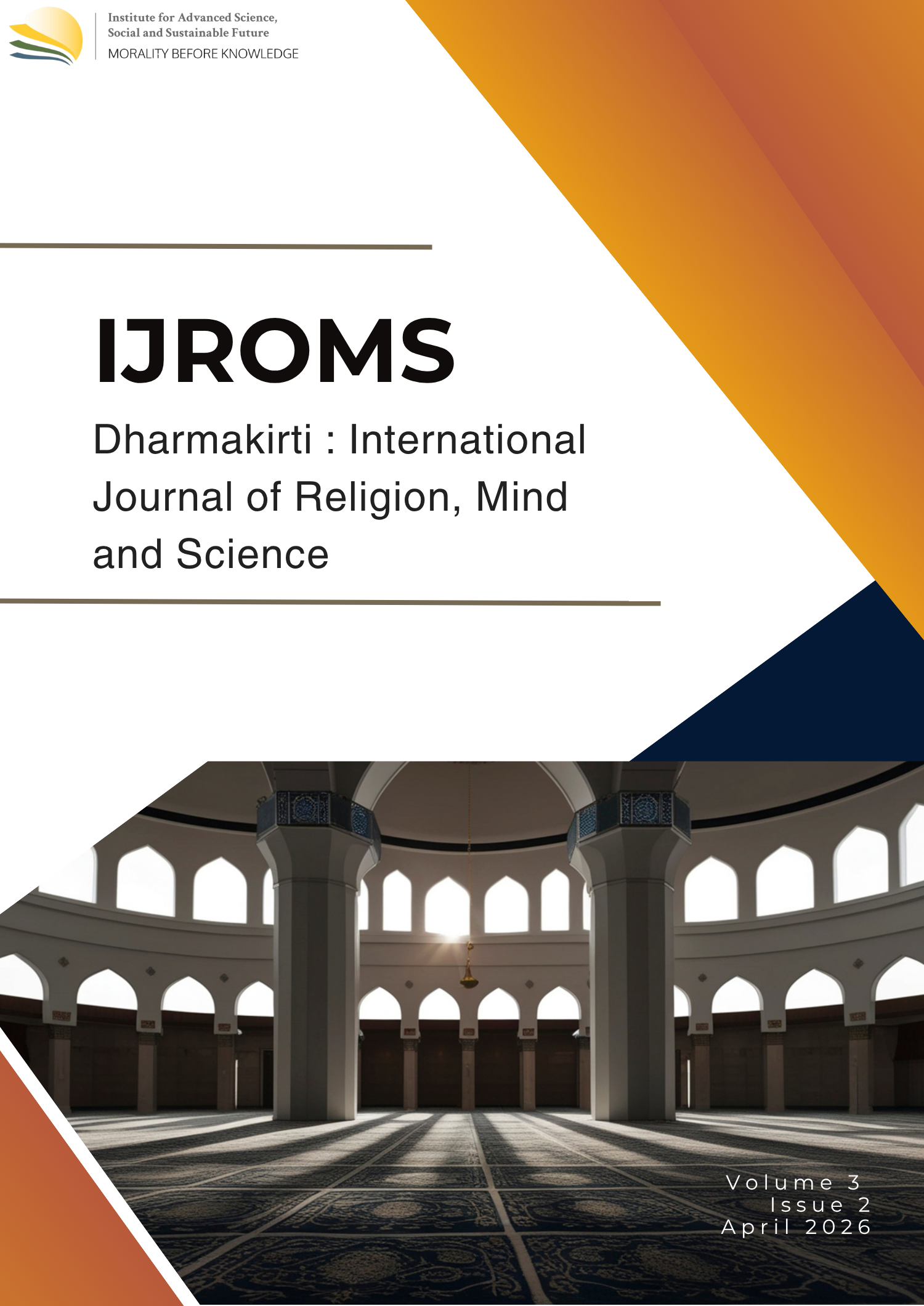
Reconstructing character education through the Dharma–Prema curriculum: A perspective on education policy
DOI:
https://doi.org/10.61511/ijroms.v3i2.2026.3681Keywords:
character education, love curriculum, Dharma–Prema, education policyAbstract
Background: This study is motivated by structural problems in the implementation of character education in Indonesia, which tends to be normative and instructional in nature and has not yet deeply addressed the dimension of value internalization. A number of studies indicate that the dominant approach to character education remains oriented toward formal compliance, making it less effective in fostering students’ ethical and affective awareness. In this context, this study aims to reconstruct character education through the Dharma-Prema-Based Love Curriculum as a form of policy intervention that integrates the dimensions of moral duty (dharma) and universal love (prema) within a transformative educational framework. Methods: This study employs a qualitative approach using an educational policy analysis design and a descriptive-analytical approach. Data collection techniques involved documentary analysis and phased in-depth interviews, while data analysis was conducted through data reduction, thematic categorization, interpretation of meaning, and the drawing of analytical conclusions, emphasizing the interrelationship between policy issues, curriculum design, and their strategic implications. Findings: The research findings indicate that the Dharma-Prema-Based Love Curriculum possesses the conceptual and practical capacity to address the reductionism of character education by holistically integrating cognitive, affective, and spiritual dimensions. This model strengthens the internalization of values through reflective experiences, ethical practices, and empathetic social relationships, thereby contributing to sustainable character development. Analytically, the research results indicate that the synthesis between dharma and prema provides a stronger normative and practical foundation compared to administrative and fragmentary policy approaches. Conclusion: The study’s conclusion affirms that the reconstruction of character education through the Dharma–Prema Curriculum offers a new strategic direction in Indonesia’s educational policy-one that is more integrative, reflective, and contextual, in supporting human resource development toward Indonesia Emas 2045. Novelty/Originality of this article: The novelty/originality of this article lies in the development of a curriculum model based on the philosophical synthesis of Dharma–Prema as an educational character policy intervention that systematically connects conceptual, normative, and implementational dimensionsm an approach that has not been extensively studied within the context of national education policy.
References
Andrews, T. (2021). Bourdieu’s theory of practice and the OECD PISA global competence framework. Journal of Research in International Education, 20(2), 154–170. https://doi.org/10.1177/14752409211032525
Aberšek, B., Flogie, A., & Kordigel Aberšek, M. (2023). Transformation of education: From dehumanization to re-humanization of society. In V. Lamanauskas (Ed.), Science and technology education: New developments and innovations (pp. 18–27). Scientia Socialis Press. https://doi.org/10.33225/BalticSTE/2023.18
Arti, D., Sagala, R., & Kusuma, G. C. (2024). Penguatan nilai-nilai karakter melalui pendidikan agama Islam. LEARNING: Jurnal Inovasi Penelitian Pendidikan dan Pembelajaran, 4(3), 671–681. https://doi.org/10.51878/learning.v4i3.3183
Astawa, I. P. P., Wimba, I. G. A., & Apsaridewi, K. I. (2025). Development of a competitive and adaptive Hindu education model in the global era by integrating local wisdom values and modern education. Qalamuna: Jurnal Pendidikan, Sosial, dan Agama, 17(1), 13–28. https://doi.org/10.37680/qalamuna.v17i1.6312
Beaton, E. E., DeJordy, R., & Foster, P. (2021). The lived experience of managerialization: Understanding values conflict in non-profits through a pragmatic institutionalism. Journal of Management Studies, 58(6), 1471–1506. https://doi.org/10.1111/joms.12661
Bonilla-Jurado, D., Zumba, E., Lucio-Quintana, A., Yerbabuena-Torres, C., Ramírez-Casco, A., & Guevara, C. (2024). Advancing university education: Exploring the benefits of education for sustainable development. Sustainability, 16(17), Article 7847. https://doi.org/10.3390/su16177847
Chu, I., & Vu, M. C. (2022). The nature of the self, self-regulation and moral action: Implications from the Confucian relational self and Buddhist non-self. Journal of Business Ethics, 180(1), 245–262. https://doi.org/10.1007/s10551-021-04826-z
Costa, J., Alscher, P., & Thums, K. (2024). Global competences and education for sustainable development: A bibliometric analysis to situate the OECD global competences in the scientific discourse. Zeitschrift für Erziehungswissenschaft. https://doi.org/10.1007/s11618-024-01220-z
Dalrymple, K. A. (2024). Erasing our humanity: Crisis, social emotional learning, and generational fractures in the Nduta refugee camp. Genealogy, 8(3), Article 105. https://doi.org/10.3390/genealogy8030105
Eksantoso, S. (2025). Pentingnya pendidikan karakter dalam dunia pendidikan. Syntax Idea, 6(12), 6838–6845. https://doi.org/10.46799/syntax-idea.v6i12.12114
Das, G., & Sarkar, B. R. (2025). Reimagining morality: Applying Indian ethical frameworks to contemporary societal challenges in India. International Journal of Research and Scientific Innovation, 12(7). https://doi.org/10.51244/ijrsi.2025.120700040
Hidayah, P. N. (2025). Dekonstruksi pendidikan progresif perspektif filsafat Islam: Menjawab tantangan dehumanisasi pendidikan kontemporer. Al-Qarawiyyin: Jurnal Ilmu Ushuluddin, 1(3), 157–175. https://doi.org/10.64691/al-qarawiyyin.v1i3.47
Hoggan, C., & Hoggan-Kloubert, T. (2022). Critiques and evolutions of transformative learning theory. International Journal of Lifelong Education, 41(6), 666–673. https://doi.org/10.1080/02601370.2022.2164434
Iqbal, M., Panjaitan, A. Y., Helvirianti, E., Nurhayati, N., & Ritonga, Q. S. P. (2024). Relevansi pendidikan karakter dalam konteks pendidikan Islam: Membangun generasi berkarakter Islami. Indonesian Research Journal on Education, 4(3), 13–22. https://doi.org/10.31004/irje.v4i3.568
Isser, S. S., Raj, N., Tomar, M., Marwaha, S. S., & Shastri, S. (2024). Value-based education in NEP 2020: Fostering ethical and moral growth through Dharma. Asian Education and Development Studies, 13(5), 579–597. https://doi.org/10.1108/AEDS-06-2024-0121
Jamil, S., Irawati, I., Taabudilah, M. H., & Haryadi, R. N. (2023). Pentingnya pendidikan agama Islam dalam membentuk kesadaran sosial dan kemanusiaan. Kaipi: Kumpulan Artikel Ilmiah Pendidikan Islam, 1(2), 35–38. https://doi.org/10.62070/kaipi.v1i2.32
Kioupi, V., & Voulvoulis, N. (2022). Education for sustainable development as the catalyst for local transitions toward the sustainable development goals. Frontiers in Sustainability, 3, Article 889904. https://doi.org/10.3389/frsus.2022.889904
Khongsankham, W., Pianthaisong, Y., Meedindam, R., Niyomves, B., & Jedaman, P. (2024). Fostering emotional intelligence and social competence: A comprehensive review of social-emotional learning (SEL) in education. Journal of Education and Learning Reviews, 1(1), 17–28. https://doi.org/10.60027/jelr.2024.764
Mansir, F. (2022). The humanistic education model in virtual learning during COVID-19 pandemic. Jurnal Sosiologi Pendidikan Humanis, 7(1), 1–11. https://doi.org/10.17977/um021v7i1p1-11
Merritt, C. C., Farnworth, M. D., Kennedy, S. S., Abner, G., Wright II, J. E., & Merritt, B. (2020). Representation through lived experience: Expanding representative bureaucracy theory. Human Service Organizations: Management, Leadership & Governance, 44(5), 434–451. https://doi.org/10.1080/23303131.2020.1797969
Mezirow, J. (2000). Learning as Transformation: Critical Perspectives on a Theory in Progress. The Jossey-Bass Higher and Adult Education Series. Jossey-Bass Publishers.
Moyer, J. M., & Sinclair, A. J. (2020). Learning for sustainability: Considering pathways to transformation. Adult Education Quarterly, 70(4), 340–359. https://doi.org/10.1177/0741713620912219
Nakhare, K. Y. (2025). A study of various facets of Dharma as duty in the Mahabharata. MET Management Review, 12(1), 56–62. https://doi.org/10.34047/MMR.2025.12108
Okur-Berberoglu, E. (2024). Affective learning: Why we need a humanistic curriculum. World Futures: Journal of General Evolution, 80(1), 56–69. https://doi.org/10.1080/02604027.2024.2315237
Purwati, P., Japar, M., Qomariyah, L., & Tentama, F. (2024). Moral knowing, moral feeling, and moral action in reflecting moral development of students in junior high school. International Journal of Evaluation and Research in Education, 13(3), 1602–1609. https://doi.org/10.11591/ijere.v13i3.25499
Rumahuru, Y. Z., & Talupun, J. S. (2021). Pendidikan agama inklusif sebagai fondasi moderasi beragama: Strategi merawat keberagaman di Indonesia. Kurios: Jurnal Teologi dan Pendidikan Agama Kristen, 7(2), 453–462. https://doi.org/10.30995/kur.v7i2.323
Sari, N. P., & Ariyoga, I. N. (2023). Pendidikan karakter Hindu dalam Kitab Sarasamuccaya. Maha Widya Duta: Jurnal Penerangan Agama, Pariwisata Budaya, dan Ilmu Komunikasi, 7(2), 101–110. https://doi.org/10.55115/duta.v7i2.3994
Singer-Brodowski, M. (2023). The potential of transformative learning for sustainability transitions: Moving beyond formal learning environments. Environment, Development and Sustainability, 27(9), 20621–20639. https://doi.org/10.1007/s10668-022-02444-x
Sudarsana, I. K., & Andriyani, N. L. P. L. (2024). Membentuk karakter dan kesadaran lingkungan melalui pendidikan agama Hindu. Jurnal Simki Pedagogia, 7(1), 228–242. https://doi.org/10.29407/jsp.v7i1.613
Surpi, N. K., & Ardana, I. K. (2022). Metode pembelajaran filsafat Hindu: Studi teks filsafat India klasik dan proyeksinya pada pembelajaran filsafat Hindu dewasa ini. Jurnal Penelitian Agama Hindu, 6(4), 289–304. https://doi.org/10.37329/jpah.v6i4.1696
Thuong, N. L. T., & Untara, I. M. G. S. (2024). Ancient Indian epistemology and modern cognitive science: Exploring Vedic insights in contemporary thought processes. Dharmakirti: International Journal of Religion, Mind and Science, 2(1), 29–41. https://doi.org/10.61511/ijroms.v2i1.2024.1257
Zembylas, M. (2023). The affective ideology of the OECD global competence framework: Implications for intercultural communication education. Pedagogy, Culture & Society, 31(2), 305–323. https://doi.org/10.1080/14681366.2022.2164336
Zilva, D. R. (2023). The role of social and emotional learning in student success. Journal of Education Review Provision, 3(1), 20–27. https://doi.org/10.55885/jerp.v3i1.152
Downloads
Published
How to Cite
Issue
Section
Citation Check
License
Copyright (c) 2026 I Ketut Donder, Sandhya Tiwari, I Ketut Wardana, Prasanthy Devi Maheswari, Ni Wayan Jemiwi Jero

This work is licensed under a Creative Commons Attribution 4.0 International License.